Thursday, October 13, 2011

American Cocker Spaniel.

The American Cocker Spaniel is a small and cheerful Dog, originally bred as a hunting and gun Dog. The English Cocker Spaniel is the ancestor of the American Cocker Spaniel and is thought to have arrived in North America as early as the 14th century. They were bred for hunting, tracking and as a watchdog, but in the 19th century, the want for a smaller version of the English Cocker Spaniel, gave rise to the American Cocker Spaniel found today. Although the two were originally only different in size, over the years, they began to adopt very different traits leading to their listing as separate breeds in 1945. Today, the American Cocker Spaniel is the smallest breed of gun Dog and is also one of the most popular Dogs in America.
The American Cocker Spaniel is a small and compact Dog, known for it's patience and agility when flushing out game (particularly birds). As with other Spaniels, the mouth of the American Cocker Spaniel is soft and gentle, making them perfect for retrieving game-birds without causing them any further damage. One of the most distinctive features of the American Cocker Spaniel is their rounded head, with long, fluffy ears that fall on either side. The American Cocker Spaniel's coat is medium-length, thick and is well-known for it's softness. Their silky fur comes in a variety of colours depending on the bloodline, and requires daily grooming to avoid matting, particularly around the feet.
THEY HAVE BEAUTIFUL COLORS&
AND HAVE A NICE LOOKING SILKY FUR.
The American Cocker Spaniel is a loyal and excitable breed, that has a typically joyful and trusting temperament. They are always eager to please their owner and are known to be both cooperative and fairly intelligent Dogs, listening to, understanding and obeying commands, but they are also known to be stubborn from time to time. Their gentle, obedient and affectionate nature means that they are often good as a family pet, interacting and responding well, to both children and other animals. They are known to be happy and merry for the majority of the time and love to exercise their wild hunting instincts through running, swimming and retrieving toys.
AMERICAN"          " PUPS ARE VERY
CUTE AND SEE THIS TWO GREAT PUPS
HAVING FUN WITH THE MOTHER!!!
The American Cocker Spaniel was originally bred from the English Cocker Spaniel to produce the same breed, but a little smaller. This meant that the American Cocker Spaniel was the ideal size for flushing smaller game-birds such as Quails and Woodcock out of their hiding places with ease. Today, one of the American Cocker Spaniel's most notable features is their silky, feathered fur which is particularly prominent on their long, dropped ears and around their feet. Although they are still commonly used as hunting and gun Dogs, they are most commonly kept for show and companionship and are now one of America's most popular domestic breeds.
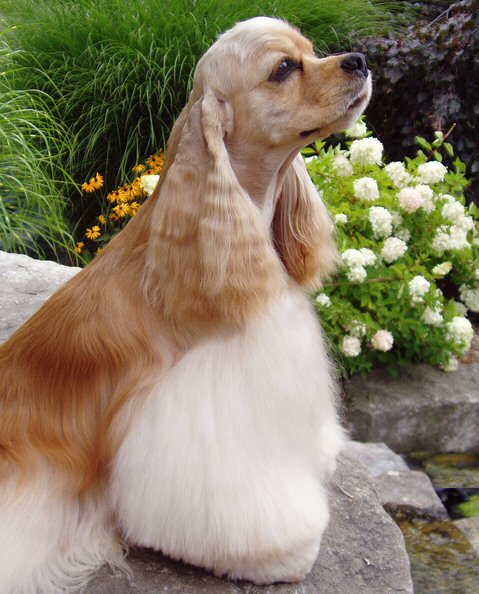
THEY COME IN LARGE VARIETY
 OF COLORS.LIKE THIS BEAUTIFUL
AMERICAN COCKER SPANIEL!
Despite a number of variations within the breed, the American Cocker Spaniel is known to still possess it's original hunting streak and is commonly said to have such a great love of toys, that it will go to great lengths to obtain more, often hiding or destroying an old toy just to get a new one. They are however associated with a number of health problems including the generally life-threatening IMHA (Immune Mediated Hemolytic Anemia). American Cocker Spaniels are also prone to a number of both ear and eye conditions, but these can generally be much more easily treated.

American Foxhound

The American Foxhound dates back to the 1700s, when they were bred from English Foxhounds and French Foxhounds by George Washington. Their most notable ancestors though are the English Foxhounds that arrived in North America in 1650 with the English settlers. Back then, hunters required a domestic breed that had similar physical characteristics to the English Foxhound, but one that was both faster and had a keener sense of smell than the already existing breeds. In the 17th century, the American Foxhound was most commonly used for seeking out the native people, before it later became a highly effective hunter of wild animals. American Foxhounds are kept both on their own and as pack animals, in groups that tend to contain between 10 and 20 individuals, primarily by hunters and farmers.
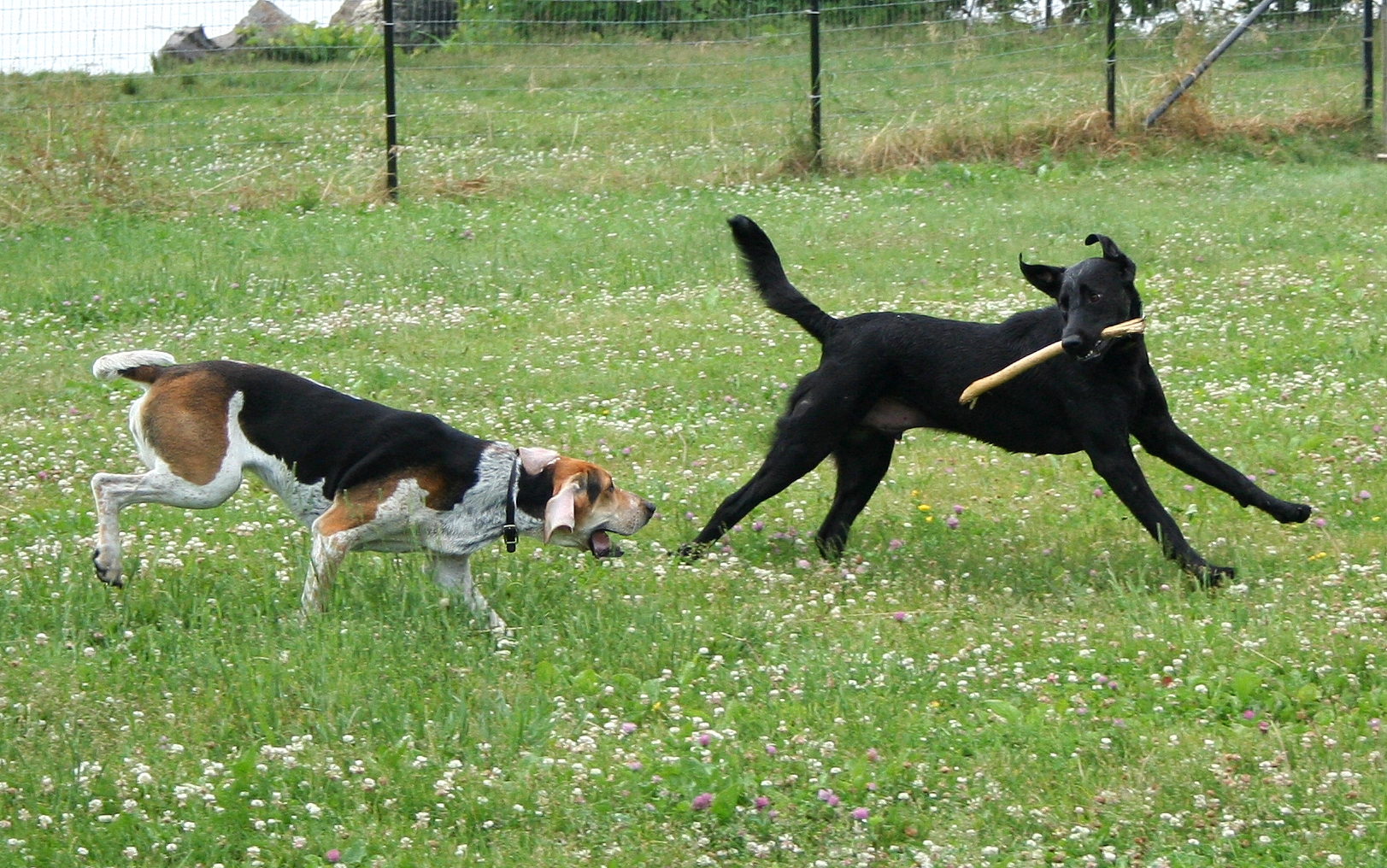
AMERICAN HOUND & LABRADOR RETRIEVER PLAYING.
The American Foxhound is large breed of domestic Dog, growing to an average height of 63cm tall. They are long and lean animals, with straight, long legs and a narrow tail which curves slightly upwards. The American Foxhound has a short coat of coarse fur which is most commonly white, brown, tan, or black in colour, and is known to shed fairly regularly. The American Foxhound's long head is dome-shaped with large, wide-set eyes that are generally hazel or brown in colour. Their wide pendant-shaped ears lie flat on either side of their head, framing the American Foxhound's face. Despite being leaner than the English Foxhound, the American Foxhound's body is incredibly muscular, allowing it to pursue a chase with great stamina, speed and agility.
AMERICAN FOXHOUND PAINTING.
The American Foxhound has a generally loyal, sweet, affectionate and gentle nature when at home, but like other Hounds, they are incredibly dedicated and brave when hunting. They are however known to be relatively stubborn when they come across a scent trail and can run incredibly fast when giving chase. As a household pet, the American Foxhound needs a great deal of exercise due to it's incredibly active nature and is known to get on well with other domestic Dog breeds, mainly due to it's history as a pack-animal. The American Foxhound does however need a constant pack-leader to avoid any behavioural issues that may occur. Even though the American Foxhound is an incredibly responsive animal, they are not known to be particularly wary of strangers and rarely show any aggressive tendencies.
AMERICAN FOX HOUND PUPS!
SO NICE TO SEE..
The American Foxhound was first bred in the 1700s by George Washington, by using what is believed to be a combination of the English Foxhound and the French Foxhound, which each had their own desirable traits. Hounds were primarily used by hunters and farmers to seek out animals and all have a very strong sense of smell. Washington however, required a breed that had an even keener sense of the smell than the current breeds, and also had incredible speed and stamina. Since then, the American Foxhound is still found throughout the United States but is thought to be most popular with hunters and farmers. Although they do make good companions, they are not particularly common household pets probably because of their high energy levels and the fact that their incredibly sensitive nose can lead them to become very stubborn.
The American Foxhound was bred by the President after having received a gift of a French Foxhound. Having written about both the French and English Foxhounds in his journals on many occasions, the leaner, lighter and faster American Foxhound appeared soon afterwards and quickly became a popular choice among Hounds. Despite however, being one of the few domestic breeds native to North America, the American Foxhound is actually quite rare today with adoption levels of these Dogs being very low. The American Foxhound though is loved by owners, particularly for their special bark which consists of a loud, deep bark followed by a high-pitched howl. The bark of the American Foxhound is apparently so harmonious that is has appeared in songs.


Wednesday, October 12, 2011

Indian Star Tortoise facts

The Indian star tortoise is a medium sized species of tortoise found in the dry and arid forests of both Indian and Sri Lanka. The Indian star tortoise is named for the star-like patterns on it's high-domed shell which are distinctive to both species of star tortoise (the other being the critically endangered Burmese star tortoise, found in the deciduous forests of Burma).
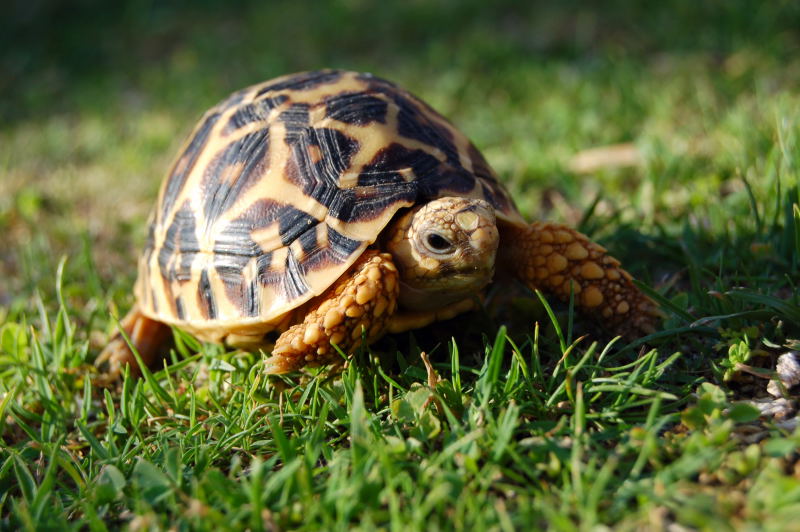
BABY INDIAN STAR TORTOISE!

As it's name suggests the Indian star tortoise is found across the Indian sub-continent, more specifically, the Indian star tortoise is found in the central and Southern parts of India, in West Pakistan and in Sri Lanka. The Indian star tortoise is most commonly found in semi-arid scrub forest, along with thorny and grassland habitats, where there is plenty of vegetation both to hide in and munch on.
The attractive star-like patterns on the shell of the Indian star tortoise actually help the tortoise to blend into it's surroundings more easily, as well as looking very pretty. The distinctively marked shell of the Indian star tortoise, actually breaks up the hard line of it's shell when it is grazing, making this reptile not so obvious to passing predators.
Like many other species of tortoise around the world, the Indian star tortoise is a herbivorous animal that has a purely vegetarian diet. The Indian star tortoise browses in the dry forests of the Indian sub-continent in search of a wide variety of plant life from leaves, to fruits and berries and numerous different species of flower that are found growing in such arid environments.

Despite it's hard and protective outer shell, the Indian star tortoise is successfully preyed upon by a number of other animals in their native habitats. Large birds of prey and other reptiles such as snakes are the most common predators of the Indian star tortoise along with humans that have both hunted the tortoise for food, as well capturing them for the exotic pet trade and moving in on their native habitats.
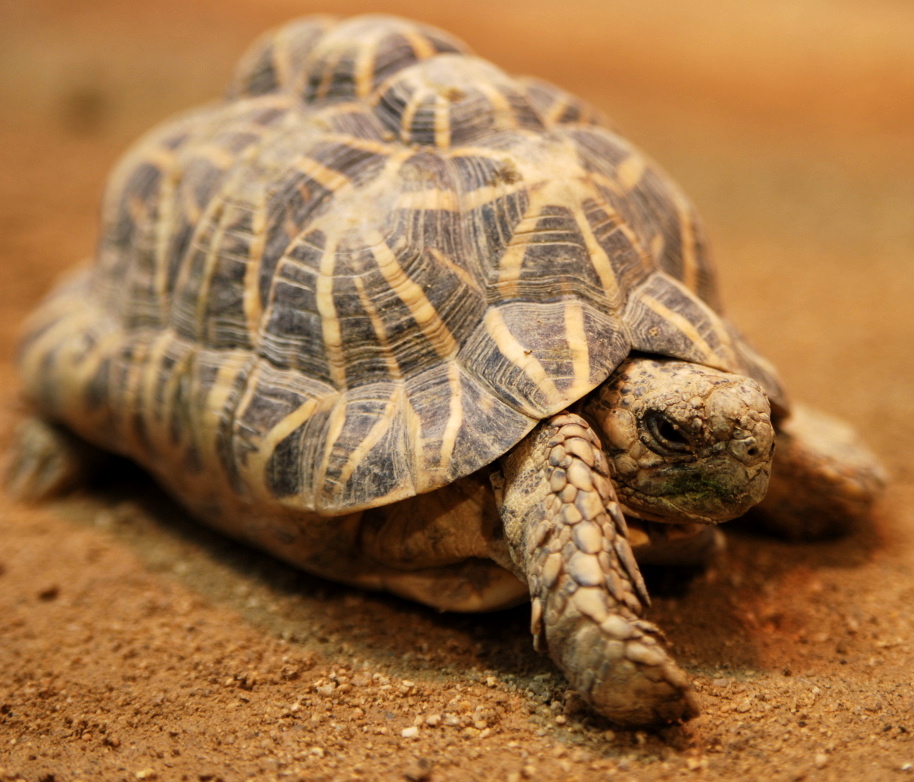
CAN YOU SEE SMALL TORTOISE ? THEY ARE SOME
BABY TORTOISES!
The Indian star tortoise begins its mating season with the coming of the monsoon, so the exact time is dependent on the area in which the individual lives. Female Indian star tortoise lay an average of 7 eggs per clutch although, this can be as many as 10. The Indian star tortoise is known to be difficult to be breed in captivity and so should only be attempted by experience breeders.

Today, the Indian star tortoise has been listed as Least concern which means that allow this species is not under immediate threat from extinction, population numbers are falling across much of the Indian star tortoise's native range thanks to habitat loss and the introduction of other predators to their natural habitats.

Tuesday, October 11, 2011

American Bulldog

Although the exact origins of the American Bulldogare still not quite clear, they are most commonly thought to have derived from English Bulldogs that arrived in North America with European colonists. Despite there being a great variety within the breed today, the American Bulldog is thought to be the most typical example of the original EnglishBulldogs of the 17th and 18 centuries. Bred and kept primarily for hunting and as a guard Dog, the American Bulldog was also used in Bull baiting - a cruel and bloody sport where the American Bulldog would publicly fight and being down a Bull. The American Bulldog is most commonly found across the ranches of the southern states of the USA, where it has been also known as the Southern White, the Country Bulldog and the White Bulldog.
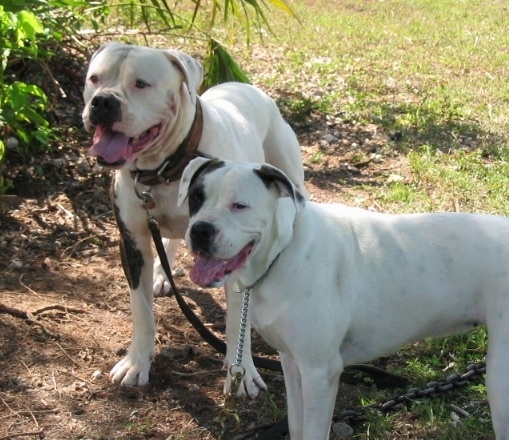
The American Bulldog is a large and powerful breed of Dog belonging to the Mastiff family. They share many of their characteristics with other Mastiff breeds including their small, half-pricked, pendant shaped ears and their square, broad head. The American Bulldog is bigger, faster and more agile than the English Bulldog, and has such powerful hind legs that they are able to jump up to 6ft high. The American Bulldog has short, coarse fur that can be found in a variety of colours, but most notably white and brindle. They are an incredibly muscular and powerful breed having been bred as hunters, guarders and to fight (and win) against Bulls.
TWO AMERICAN BULLDOGS.
The American Bulldog is a courageous and fearless breed, known to be incredibly aggressive at times when it feels under threat. They are however friendly and even sociable Dogs, having been known to be kept in a pack that primarily hunts large carnivores, such as Bears. They are also known to be loyal and devoted towards their owner, providing that they assert themselves as the leader of the pack (dominance issues may occur otherwise). Although the American Bulldog is not listed under the UK's Dangerous Dogs Act 1991, it is not uncommon for them to be confused with more aggressive breeds such as Pit Bulls. These Dogs are not related but are indeed banned, so any potential owner of the American Bulldog is encouraged to acquire the adequate paperwork to prove that their Dog is not a dangerous breed.
THEIR ARE VARIOUS TYPES OF
COLORS.
The color of the America Bulldog's fur, along with very subtle differences in general appearance and temperament, is said to differ between different areas. In regions where the American Bulldog is most popular, the Dogs are said to be able to differ between these places, which suggests that the American Bulldog is most commonly bred with individuals that live close by. After their near extinction in the 1940s, the American Bulldogs found throughout America today, are nearly all thought to have derived from Dogs bred by just two breeders during the mid 1900s. Females give birth to between 6 and 11 puppies per litter and can often live to be more than 15 years old.
Despite being a widely distributed and popular breed today, the American Bulldog was on the verge of becoming extinct towards the mid 1900s. On returning from service in the Second World War, John D. Johnson decided to follow in his father's footsteps and resumed the breeding of the American Bulldog in the United States, and ultimately saved this breed from disappearing forever. The American Bulldog was first recognised as an official breed in 1970, when it was registered as the American Pit Bulldog. However, the name of this domestic breed was soon changed to the American Bulldog to avoid confusion with the American Pit Bull Terrier (to which this breed can look quite similar and the two can often be confused).

Sunday, October 2, 2011

Guinea Pigs Info..

The guinea pig is found in the Andes mountains in South America, were it is used as a stable food source for the local peoples. Todays domestic guinea pig is thought to be a subspecies of the Andes guinea pig and therefore cannot be found in the wild.The guinea pig is a small, furry herbivore that rarely grows to more than 30cm in length. The domestic guinea pig can get to around 6 or 7 years old. A wild guinea pig would probably be about 3 or 4.
THE PARTS OF THE  GUINEA PIG.

All around the world guinea pigs are kept as pets. If treated properly and given the right amount of time and energy, they can become extremely tame.They are a lot of effort and are far from being easy to take care of but they are well worth the effort.The guinea pig tends to communicate through a series of high pitched squeals. Apparently guinea pigs are unable to judge height and distances accurately and should therefore never be left on a bed or table without supervision.
Guinea pigs were thought to have been domesticated and used in South America as a source of food from as early as 5,000 BC and the guinea pig was also often depicted in art and are seen in statues that are from the times of the ancient civilizations of Peru. In some instances the guinea pig is thought to be a supernatural medium and the guinea pig is therefore often used to heal the sick.
GUINEA PIG WITH IT'S BABY.
With the Spanish conquest of South America in the 1500s came the selective breeding of the guinea pig, which has resulted in the diverse variety of guinea pigs that are seen today.
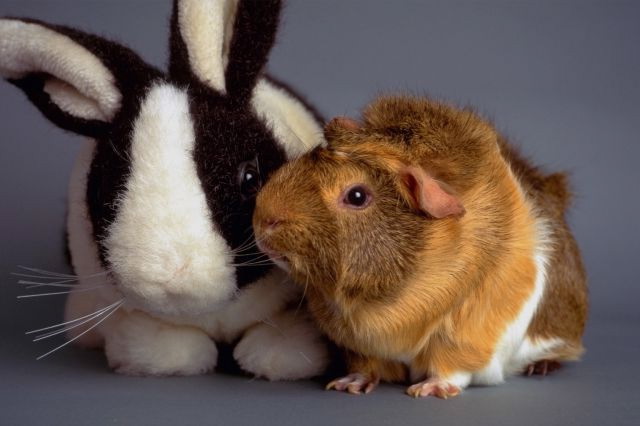
The domestic guinea pigs love to be with at least one other guinea pig, as guineapigs are very sociable animals. Guinea pigs are also highly territorial and pet owners often find the guinea pig acting strangely after its cage has been cleaned out. Commonly guinea pigs will urinate and will drag their body along the floor of their newly cleaned cage in order to remark their territory.
GUINEA PIG WITH IT'S FRIEND
RABBIT.
Wild guinea pigs tend to eat grass and small plant matter as the main part of theirdiet and the continuously growing teeth of the guinea pig are well suited to such adiet. The wild guinea pig is also known to supplement its diet by eating its own feces, soft pellets that are specially produced by the guinea pig so that it can digest the vital nutrients contained within it.
Domestic guinea pigs have a diet that is primarily made up from dried food pellets and the diet of the guinea pig is often bulked out by the guinea pig eating the hay (dried grass) that is put into the cage of the guinea pig, usually as bedding.

Airedale Terrier.


AIREDALE TERRIER SITTING IN THE
GRASS.
AIREDALE TERRIER PUPS,SO CUTE.
Unlike a number of species of other domestic Dog, the origins of the Airedale Terrier are well known. This breed was created 150 years ago by working class farmers in a valley in the West Riding of Yorkshire. Cross-bred from a Welsh Terrier and an Otter Hound, the Airedale Terrier quickly became the Terrier of choice and was officially recognized in 1886. The Airedale Terrier is the largest of all Terrier breeds and was originally bred as a hunter of small animals, particularly rats. Although the large size of the Airedale Terrier meant that it cannot actually go underground, they were very efficient at catching the rats once they had surfaced. The Airedale Terrier has many desirable traits, including being very intelligent meaning that they have also been used as messengers and police Dogs.The Airedale Terrier has a large square body which is only emphasized by it's incredibly straight front legs and a deep, wide chest. It's long head and muzzle are both broad and flat, and it has small pointed ears which are almost always folded down. The stiff, slightly curved tail of the Airedale Terrier is usually docked and tends to most commonly be black in color. The majority of this breed's stocky body is tan in color (including it's ears), with black and sometimes reddish coloured markings. Their double coat of fur is waterproof with a coarse and wiry layer, that is lined by softer warmer fur (a characteristic of the Otter Hound). The Airedale Terrier also has a very keen sense of smell due to it's combination of Hound and Terrier.The Airedale Terrier is known to be a loyal and very intelligent breed of domestic Dog. They are known to be independent and strong-willed, and will often form a close bond with their master and family. The Airedale Terrier is an incredibly sociable Dog and does not appreciate being left without Human companionship for long periods of time. They are known to be quite destructive if they become bored. Airedale Terriers are incredibly active and should be able to get a lot of exercise, although this is something that does appear to subside slightly with age. Like other Terriers, the Airedale Terrier should be trained from an early age as they can be fairly stubborn at times, but are known to be able to co-inhabit households peacefully with other animals and children if properly trained.The Airedale Terrier was first bred in the 1800s from a Welsh Terrier and an OtterHound in order to produce a breed that had desirable qualities found in both breeds. Due to the fact that they have been bred as hunting Dogs from the start, the Airedale Terrier is naturally a very intelligent and loyal breed. Females gives birth to average litter sizes of between 7 and 10 puppies that, like many other canines, are born both blind and relatively hairless and it takes at least a couple of weeks before they are able to first see the world. Airedale Terriers should be groomed regularly to reduce the risk of heavy moulting and to prevent skin infections.
The Airedale Terrier is named after the river Aire, which runs through the surrounding valleys that this breed first originated from in Yorkshire. The area was said to have a bigger problem with rats than usual so these larger ratters begin to become the Terrier of choice with the locals. The Airedale Terrier usually lives to be around 13 years old but they are known to suffer from genetic defects including problems with their hips and eyes.

Saturday, October 1, 2011

White Tailed Deer.

The white-tailed deer (Odocoileus virginianus), also known as the Virginia deer or simply as the whitetail, is a medium-sized deer native to the United States (all but five of the states), Canada, Mexico, Central America, and South America as far south as Peru. It has also been introduced to New Zealand and some countries in Europe, such as Finland, Czech Republic, and Serbia.
SUB SPECIES.

  •  virginianus – Virginia Whitetailed deer or Southern white-tailed deer
  • O. v. acapulcensis – Acapulco white-tailed deer (southern Mexico)
  • O. v. borealis – Northern (woodland) white-tailed deer (the largest and darkest white-tailed deer)
  • O. v. cariacou – (French Guiana and north Brazil)
  • O. v. carminis – Carmen Mountains Jorge deer
  • O. v. chiriquensis – Chiriqui white-tailed deer (Panama)
  • O. v. clavium – Key Deer or Florida Keys white-tailed deer found (Florida Keys)
  • O. v. couesi – Coues white-tailed deer, Arizona white-tailed deer, or fantail deer
  • O. v. curassavicus – (Curaçao)
  • O. v. dacotensis – Dakota white-tailed deer or Northern plains white-tailed deer (most northerly distribution, rivals the Northern white-tailed deer in size)
  • O. v. goudotii – (Colombia (Andes) and west Venezuela)
  • O. v. gymnotis – South American white-tailed deer (northern half of Venezuela, including Venezuela's Llanos Region)
  • O. v. hiltonensis – Hilton Head Island white-tailed deer
  • O. v. leucurus – Columbian white-tailed deer (Oregon and western coastal area)
  • O. v. macrourus – Kansas white-tailed deer
  • O. v. margaritae – (Margarita Island)
  • O. v. mcilhennyi – Avery Island white-tailed deer
  • O. v. mexicanus – Mexican white-tailed deer (central Mexico)
  • O. v. miquihuanensis – Miquihuan white-tailed deer (central Mexico)
  • O. v. nelsoni – Chiapas white-tailed deer (southern Mexico and Guatemala)
  • O. v. nemoralis – (Central America, round the Gulf of Mexico to Surinam further restricted to from Honduras to Panama)
  • O. v. nigribarbis – Blackbeard Island white-tailed deer
  • O. v. oaxacensis – Oaxaca white-tailed deer (southern Mexico)
  • O. v. ochrourus – (Tawny) Northwest white-tailed deer or Northern Rocky Mountains white-tailed deer
  • O. v. osceola – Florida coastal white-tailed deer
  • O. v. peruvianus – South American white-tailed deer or Andean white-tailed deer (most southerly distribution in Peru and possibly, Bolivia)
  • O. v. rothschildi – Coiba Island white-tailed deer
  • O. v. seminolus – Florida white-tailed deer
  • O. v. sinaloae – Sinaloa white-tailed deer (mid-western Mexico)
  • O. v. taurinsulae – Bulls Island white-tailed deer
  • O. v. texanus – Texas white-tailed deer
  • O. v. truei – Central American white-tailed deer (Costa Rica, Nicaragua and adjacent states)
  • O. v. thomasi – Mexican Lowland white-tailed deer
  • O. v. toltecus – Rain Forest white-tailed deer (southern Mexico)
  • O. v. tropicalis – (western Colombia)
  • O. v. ustus – (Ecuador)
  • O. v. venatorius – Hunting Island white-tailed deer
  • O. v. veraecrucis – Northern Vera Cruz white-tailed deer
  • O. v. yucatanensis – Yucatán white-tailed deer.
  • The deer's coat is a reddish-brown in the spring and summer and turns to a grey-brown throughout the fall and winter. The deer can be recognized by the characteristic white underside to its tail, which it shows as a signal of alarm by raising the tail during escape. There is a population of white-tailed deer in the state of New York that is entirely white (except for areas like their noses and toes)—not albino—in color. The former Seneca Army Depot in Romulus, New York, has the largest known concentration of white deer. Strong conservation efforts have allowed white deer to thrive within the confines of the depot.White-tailed deer are generalists and can adapt to a wide variety of habitats.The largest deer occur in the temperate regions of Canada and United States. The Northern white-tailed deer (borealis), Dakota white-tailed deer (dacotensis), and Northwest white-tailed deer (ochrourus) are some of the largest animals, with large antlers. The smallest deer occur in the Florida Keys.
    MALE WHITE TAILED DEER.
    FEMALE"         "
    Although most often thought of as forest animals depending on relatively small openings and edges, white-tailed deer can equally adapt themselves to life in more open prairie, savanna woodlands, and sage communities as in the Southwestern United States and northern Mexico, These savanna-adapted deer have relatively large antlers in proportion to their body size and large tails. Also, there is a noticeable difference in size between male and female deer of the savannas. The Texas white-tailed deer (texanus), of the prairies and oak savannas of Texas and parts of Mexico, are the largest savanna-adapted deer in the Southwest, with impressive antlers that might rival deer found in Canada and the northern United States. There are also populations of Arizona (couesi) and Carmen Mountains (carminis) white-tailed deer that inhabit montane mixed oak and pine woodland communities. The Arizona and Carmen Mountains deer are smaller but may also have impressive antlers, considering their size. The white-tailed deer of the Llanos region of Colombia and Venezuela (apurensis and gymnotis) have antler dimensions that are similar to the Arizona white-tailed deer.
    Whitetail deer eat large varieties of food, commonly eating legumes and foraging on other plants, including shoots, leaves, cacti, and grasses. They also eat acorns, fruit, and corn. Their special stomach allows them to eat some things that humans cannot, such as mushrooms and Red Sumac that are poisonous to humans. Their diet varies by season according to availability of food sources. They will also eat hay, grass, white clover, and other food that they can find in a farm yard. Whitetail deer have been known to opportunistically feed on nesting songbirds, field mice, and birds trapped in Mist nets.
    The white-tailed deer is a ruminant, which means it has a four-chambered stomach. Each chamber has a different and specific function that allows the deer to quickly eat a variety of different food, digesting it at a later time in a safe area of cover. The Whitetail stomach hosts a complex set of bacteria that change as the deer's diet changes through the seasons. If the bacteria necessary for digestion of a particular food (e.g., hay) are absent it will not be digested.
    There are several natural predators of white-tailed deer. Gray wolves, cougars, American alligators, and (in the tropics) jaguars are the more effective natural predators of adult deer.Bobcats, lynxes, bears, and packs of coyotes usually will prey on deer fawns. Bears may sometimes attack adult deer while lynxes, coyotes, and bobcats are most likely to take adult deer when the ungulates are weakened by winter weather. The general extirpation of natural deer predators over the East Coast (only the coyote is now widespread) is believed to be a factor in the overpopulation issues with this species. Many scavengers rely on deer as carrion, including New World vultures, hawks, eagles, foxes, and corvids (the latter three may also rarely prey on deer fawns).
    WARMTH TO THE SMALL DEER.
    Males compete for the opportunity of breeding females. Sparring among males determines a dominance hierarchy. Bucks will attempt to copulate with as many females as possible, losing physical condition since they rarely eat or rest during the rut. The general geographical trend is for the rut to be shorter in duration at increased latitude. There are many factors as to how intense the "rutting season" will be. Air temperature is one major factor of this intensity. Any time the temperature rises above 40 °F (4 °C), the males will do much less traveling looking for females, or they will be subject to overheating or dehydrating. Another factor for the strength in rutting activity is competition. If there are numerous males in a particular area, then they will compete more for the females. If there are fewer males or more females, then the selection process will not need to be as competitive.